
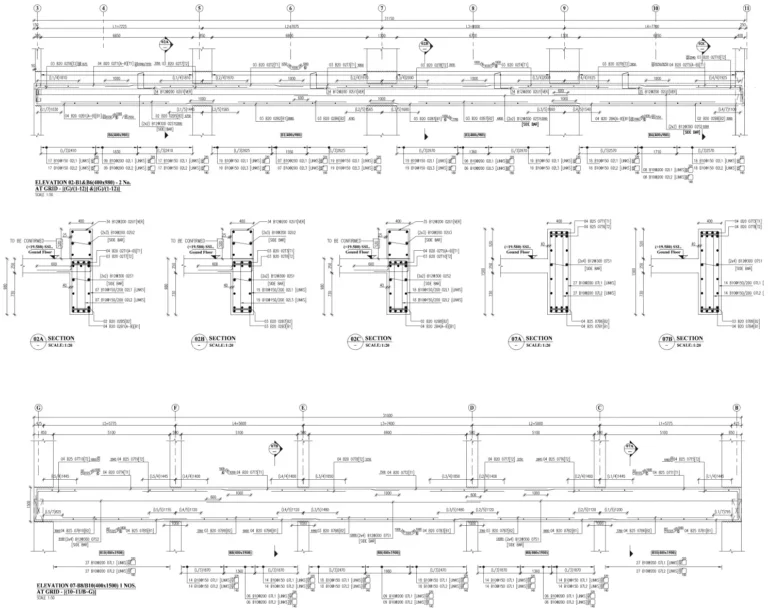
Introduction
In today’s fast-paced construction industry, accurate rebar detailing plays a crucial role in ensuring project success. Whether it is a commercial tower in Texas, a residential development in Florida, a bridge project in California, or an industrial facility in New York, reinforcement shop drawings directly impact fabrication, scheduling, and site productivity.
Unfortunately, many U.S. construction projects experience delays, increased costs, and unnecessary rework due to preventable rebar detailing mistakes. Even small errors in reinforcement drawings can create significant challenges during steel fabrication and installation.
This article explores the most common rebar detailing mistakes in U.S. projects and provides practical solutions to help contractors, engineers, fabricators, and project managers improve project efficiency.
Why Accurate Rebar Detailing Matters
Rebar detailing transforms structural design intent into fabrication-ready drawings and bar bending schedules.
Accurate detailing helps:
- Reduce Requests for Information (RFIs)
- Minimize site conflicts
- Improve steel fabrication efficiency
- Accelerate project schedules
- Reduce material waste
- Ensure compliance with project specifications
- Improve construction quality
Poor detailing can lead to fabrication errors, installation delays, inspection issues, and costly redesigns.
1. Missing or Incomplete Structural Information
One of the most common causes of detailing errors is starting the detailing process before all required information is available.
Typical Missing Information
- Structural sections
- Architectural coordination drawings
- Concrete dimensions
- Elevation details
- Opening details
- Revision updates
- Structural notes
Consequences
- Incorrect reinforcement layouts
- Multiple RFIs
- Frequent drawing revisions
- Delayed approvals
Best Practice
Always verify that the latest IFC (Issued for Construction) drawings and revisions are available before starting the detailing process.
2. Incorrect Bar Placement Around Openings
Beam, slab, and wall openings frequently create reinforcement conflicts.
Common Problems
- Missing trimming bars
- Incorrect additional reinforcement
- Poor anchorage around openings
- Reinforcement clashes
Consequences
- Site modifications
- Structural concerns
- Additional inspection requirements
Best Practice
Carefully review all architectural and MEP openings and provide complete reinforcement details around penetrations.
3. Congested Reinforcement at Beam-Column Joints
Beam-column intersections often become highly congested areas.
Common Errors
- Excessive bar concentration
- Lack of constructability review
- Insufficient spacing between bars
- Ignoring concrete placement requirements
Consequences
- Difficult concrete placement
- Honeycombing
- Installation delays
- Increased labor costs
Best Practice
Review reinforcement congestion during detailing and optimize bar arrangement while maintaining design requirements.
4. Insufficient Coordination with MEP Services
Many detailing problems occur when reinforcement drawings are prepared without considering MEP systems.
Common Conflicts
- Duct penetrations
- Pipe sleeves
- Cable trays
- Equipment foundations
Consequences
- Field modifications
- Project delays
- Costly rework
Best Practice
Coordinate structural, architectural, and MEP drawings before finalizing shop drawings.
5. Development Length and Lap Splice Errors
Improper lap splice detailing remains one of the most critical reinforcement mistakes.
Common Issues
- Incorrect splice locations
- Inadequate lap lengths
- Missing development lengths
- Non-compliance with project requirements
Consequences
- Engineering review comments
- Drawing rejection
- Structural concerns
Best Practice
Verify lap splice and development length requirements according to project specifications and applicable design standards.
6. Bar Marking and Scheduling Errors
Incorrect bar schedules can create major fabrication issues.
Typical Errors
- Duplicate bar marks
- Missing bar marks
- Incorrect quantities
- Wrong bar shapes
- Inconsistent schedules
Consequences
- Fabrication delays
- Material wastage
- Site confusion
Best Practice
Implement rigorous quality checks before issuing Bar Bending Schedules (BBS).
7. Failure to Account for Construction Sequencing
Some detailers focus solely on reinforcement placement without considering how the structure will be built.
Common Oversights
- Pour sequence conflicts
- Starter bar issues
- Phased construction requirements
- Temporary construction joints
Consequences
- Site installation difficulties
- Additional labor costs
- Delayed construction activities
Best Practice
Understand construction methodology and sequencing requirements during detailing.
8. Ignoring Reinforcement Congestion in Core Walls
High-rise projects often contain heavily reinforced core walls.
Common Problems
- Overlapping lap zones
- Excessive vertical reinforcement
- Anchor congestion
- Embedded item conflicts
Consequences
- Poor constructability
- Slow installation
- Concrete placement challenges
Best Practice
Perform detailed constructability reviews and utilize 3D reinforcement visualization when necessary.
9. Poor Revision Management
Large projects undergo multiple revisions throughout the construction cycle.
Common Mistakes
- Using outdated drawings
- Missing revision clouds
- Incomplete revision tracking
- Unclear drawing updates
Consequences
- Fabrication of incorrect bars
- Site confusion
- Costly rework
Best Practice
Maintain strict document control and revision management procedures.
10. Inadequate Quality Control Before Submission
Many errors could be eliminated through proper quality checks.
Common Quality Issues
- Dimension mismatches
- Missing sections
- Bar schedule discrepancies
- Incorrect callouts
Consequences
- Client comments
- Drawing resubmissions
- Approval delays
Best Practice
Implement a multi-level Quality Control (QC) process before issuing drawings.
How Professional Rebar Detailing Services Help
Experienced rebar detailing teams help contractors avoid costly detailing mistakes by providing:
Accurate Shop Drawings
Clear, fabrication-ready reinforcement drawings.
Detailed Bar Bending Schedules
Accurate quantities and cutting information.
Coordination Reviews
Structural, architectural, and MEP coordination.
Constructability Checks
Practical reinforcement arrangements for easier installation.
Fast Turnaround
Timely delivery to support project schedules.
Benefits of Error-Free Rebar Detailing
Projects that utilize accurate detailing experience:
- Faster drawing approvals
- Reduced RFIs
- Improved fabrication efficiency
- Lower rework costs
- Better site productivity
- Reduced project delays
- Improved project profitability
Conclusion
Many of the most common rebar detailing mistakes in U.S. projects are preventable. Errors related to reinforcement congestion, lap splice detailing, coordination issues, scheduling mistakes, and revision management can significantly impact project costs and timelines.
By investing in experienced rebar detailing professionals, implementing strong quality control procedures, and ensuring proper coordination among project stakeholders, contractors can reduce risks and improve project outcomes.
For contractors, fabricators, and engineers working on projects across the United States, accurate rebar detailing remains one of the most effective ways to improve efficiency, minimize rework, and keep projects on schedule.
FAQ Section
What is the most common rebar detailing mistake?
Bar scheduling errors, reinforcement congestion, and missing coordination details are among the most common mistakes that lead to fabrication and installation problems.
How do rebar detailing errors affect project schedules?
Errors can result in RFIs, drawing revisions, fabrication delays, site rework, and delayed concrete pours.
Why is coordination important in rebar detailing?
Coordination helps identify conflicts between structural, architectural, and MEP systems before construction begins.
Can outsourced rebar detailing improve project efficiency?
Yes. Experienced detailing companies often provide dedicated quality control, faster turnaround, and improved coordination support.
What information is required before starting rebar detailing?
Structural drawings, sections, specifications, architectural drawings, MEP layouts, and the latest project revisions are essential.