
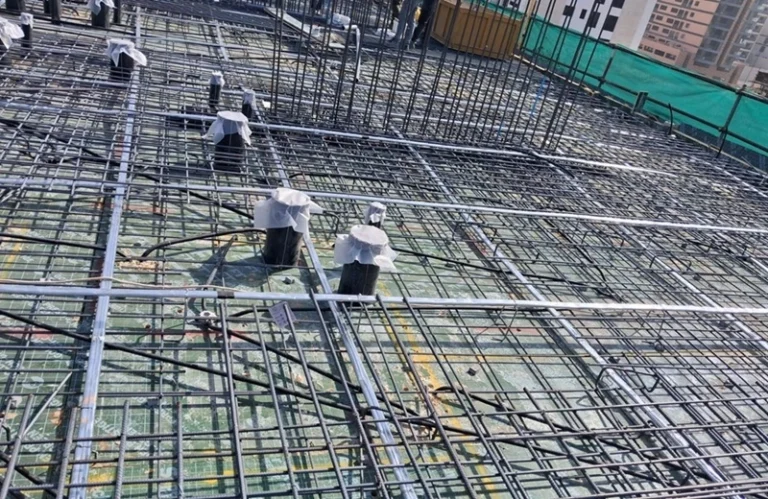
How BBS Reduces Steel Wastage and Saves Cost
Construction projects across the world face one common challenge—controlling reinforcement steel costs. Reinforcement steel can account for a significant portion of a project’s structural budget, and even a small percentage of wastage can result in substantial financial losses.
A well-prepared Bar Bending Schedule (BBS) is one of the most effective tools for reducing steel wastage while improving construction productivity. Whether you’re building residential towers in Dubai, commercial buildings in the United States, infrastructure projects in Canada, or industrial facilities in Australia, an accurate BBS can significantly improve project profitability.
In this article, we’ll explain how BBS helps reduce steel wastage, lowers project costs, and improves overall construction efficiency.
What is a Bar Bending Schedule (BBS)?
A Bar Bending Schedule (BBS) is a detailed document that lists every reinforcement bar required for a project. It includes:
- Bar mark
- Diameter
- Shape
- Length
- Quantity
- Weight
- Cutting dimensions
- Bending details
This information enables fabrication teams to cut and bend reinforcement accurately before delivery to the construction site.
Why Steel Wastage Happens
Steel wastage is often caused by:
- Manual quantity estimation
- Incorrect cutting lengths
- Frequent design revisions
- Poor coordination between engineering and fabrication
- Site cutting without planning
- Ordering excess reinforcement
- Lack of optimized cutting sequences
Even a 3–5% increase in wastage can translate into thousands of dollars in unnecessary project expenses.
How BBS Reduces Steel Wastage
1. Accurate Quantity Calculation
Every reinforcement bar is calculated individually.
Instead of estimating reinforcement quantities, engineers calculate exact lengths and quantities based on structural drawings.
This eliminates over-ordering.
Benefits include:
- Reduced excess inventory
- Lower procurement costs
- Better material planning
2. Optimized Cutting Lengths
One of the biggest advantages of BBS is cutting optimization.
Standard reinforcement bars are supplied in fixed lengths (commonly 12 m).
A professionally prepared BBS arranges cutting lengths to maximize the use of every bar.
Example:
Without optimization:
- Remaining scrap: 1.4 m
With optimization:
- Remaining scrap: 0.15 m
Across thousands of bars, these savings become substantial.
3. Eliminates Manual Site Cutting Errors
Without BBS, workers often measure and cut reinforcement directly on site.
This leads to:
- Incorrect cuts
- Rework
- Extra steel consumption
- Project delays
A detailed BBS provides ready-to-fabricate information, reducing human error.
4. Better Fabrication Planning
Fabrication yards can organize production efficiently when BBS data is available.
Advantages include:
- Organized cutting
- Reduced idle time
- Faster fabrication
- Improved production tracking
5. Prevents Duplicate Reinforcement
When reinforcement information is unclear, duplicate fabrication sometimes occurs.
A properly numbered BBS ensures:
- Every bar is uniquely identified.
- Fabrication teams produce only the required quantity.
6. Supports Digital Fabrication
Modern fabrication machines rely on digital data.
BBS integrates easily with fabrication workflows, allowing:
- Automatic cutting
- Automated bending
- Barcode tracking
- Production monitoring
Automation minimizes human errors while improving accuracy.
7. Better Procurement Planning
Instead of purchasing steel based on estimates, procurement teams can order precise quantities.
This results in:
- Lower inventory costs
- Reduced storage requirements
- Improved cash flow
- Better supplier negotiations
Cost Savings Beyond Steel
Although steel savings are significant, BBS also reduces costs in several other areas.
Lower Labour Costs
Workers spend less time:
- Measuring bars
- Correcting mistakes
- Reworking reinforcement
Faster Construction
Fabricated reinforcement arrives ready for installation.
Benefits include:
- Faster installation
- Improved productivity
- Reduced project duration
Reduced Equipment Usage
Less unnecessary cutting and bending means:
- Lower machine wear
- Reduced fuel or electricity consumption
- Lower maintenance costs
Better Quality Control
BBS creates consistency between design, fabrication, and installation.
This minimizes:
- Inspection failures
- Costly rework
- Structural discrepancies
Typical Steel Savings Using BBS
While actual savings vary by project type, many projects experience:
| Project Type | Typical Steel Wastage Without BBS | With Optimized BBS |
| Residential | 5–8% | 1–3% |
| Commercial | 4–7% | 1–2% |
| Industrial | 5–10% | 2–3% |
| Infrastructure | 6–10% | 2–4% |
For large projects consuming thousands of tonnes of reinforcement steel, these improvements can represent substantial cost savings.
Additional Benefits of BBS
Besides reducing steel wastage, BBS also provides:
- Improved project planning
- Easier quantity verification
- Better inventory control
- Faster billing
- Accurate client reporting
- Simplified site management
- Enhanced coordination between consultants and contractors
- Better audit documentation
Why Contractors Worldwide Use Professional BBS Services
Professional rebar detailing companies prepare BBS using specialized detailing software and experienced engineers.
This ensures:
- High accuracy
- Compliance with project requirements
- Faster turnaround
- Reduced construction risks
- Better coordination with shop drawings
Whether your project is located in the UAE, Saudi Arabia, Qatar, the United States, Canada, the United Kingdom, Australia, New Zealand, or India, investing in professional BBS services can improve efficiency and reduce overall construction costs.
Why Choose Constech Rebar Solutions?
At Constech Rebar Solutions, we provide professional:
- Bar Bending Schedule (BBS)
- Rebar Detailing
- Shop Drawings
- Rebar Estimation
- Reinforcement Quantity Take-Off
- Construction CAD Services
Our experienced engineers help contractors, consultants, fabricators, and developers optimize reinforcement steel usage, reduce project costs, and improve construction efficiency for projects worldwide.
Conclusion
Steel is one of the most expensive structural materials used in construction, making waste reduction essential for project success.
A professionally prepared Bar Bending Schedule (BBS) enables accurate material estimation, optimized cutting, improved fabrication, and better site coordination. The result is lower steel wastage, reduced labour costs, faster construction, and higher project profitability.
Whether you’re managing a residential development or a large-scale infrastructure project, investing in accurate BBS services is a practical way to improve efficiency and control costs.
Frequently Asked Questions (FAQ)
How much steel can a BBS save?
A professionally optimized BBS can often reduce steel wastage from around 5–10% to approximately 1–3%, depending on project complexity and fabrication practices.
Is BBS useful for small construction projects?
Yes. Even smaller residential and commercial projects benefit from improved material planning, reduced waste, and more accurate procurement.
Can BBS improve construction productivity?
Yes. By providing precise cutting and bending information, BBS reduces on-site measuring, minimizes rework, and speeds up reinforcement installation.
Who should prepare a BBS?
A qualified rebar detailing team with experience in structural drawings and reinforcement detailing should prepare the BBS to ensure accuracy and constructability.